

BAPTISM
& the Lord's Supper
Along with Christians across the world and
throughout history, our church celebrates the sacraments
of Baptism and the Lord’s Supper.
As Article 25 of the 39 Articles of Religion states:
Sacraments ordained of Christ be not only badges or tokens of Christian men’s profession,
but rather they be certain sure witnesses, and effectual signs of grace, and God’s good will towards us,
by the which he doth work invisibly in us, and doth not only quicken, but also strengthen and confirm
our Faith in him.
But what does celebrating these sacraments mean in practice? What can our church family as well as those
joining our church expect? Let’s find out…
As Article 25 of the 39 Articles of Religion states:
Sacraments ordained of Christ be not only badges or tokens of Christian men’s profession, but rather they be certain sure witnesses, and effectual signs of grace, and God’s good will towards us, by the which he doth work invisibly in us, and doth not only quicken, but also strengthen and confirm our Faith in him.
But what does celebrating these sacraments mean in practice? What can our church family as well as those joining our church expect? Let’s find out…
Baptism

We practice both adult and infant baptism. Adult baptism is for those who come to faith as adults/teenagers
and who were not baptised when they were younger. This usually involves full immersion in a baptism pool at
the front of church. The person being baptised makes their own formal declaration of faith. They may also like to
share a more informal testimony.
Those who were baptised as children may wish to celebrate the Affirmation of Baptismal Vows at church.
This may be especially appropriate for teenagers who were baptised as infants or adults who were baptised as
infants but not brought up in practicing Christian homes. Preparation for both adult baptism and the affirmation of
baptismal vows involves commitment to church life and informal conversations with our minister, staff, youth leaders
or elders.
Infant baptism is for the children of believing parent(s) who make formal promises and declarations of faith
on behalf of their child(ren). Baptism involves sprinkling with water and not full immersion! Infant baptism may also be
appropriate for older children who aren’t yet ready to make their own declaration of faith but who are willing to let their
parents make it for them. Preparation for infant baptism involves a three week course for parents with our minister.
We recognise that Bible-believing Christians (including within our church) hold different views about baptism,
especially when it comes to children. In fact, amongst our eldership we have two Baptists, one Presbyterian and an Anglican!
We therefore also offer a Service of Thanksgiving for parents who don’t want to baptise their young children, or who may
not yet be ready to make the declarations and promises themselves. This service is discussed in our baptism course.
We practice both adult and infant baptism. Adult baptism is for those who come to faith as adults/teenagers and who were not baptised when they were younger. This usually involves full immersion in a baptism pool at the front of church. The person being baptised makes their own formal declaration of faith. They may also like to share a more informal testimony.
Those who were baptised as children may wish to celebrate the Affirmation of Baptismal Vows at church. This may be especially appropriate for teenagers who were baptised as infants or adults who were baptised as infants but not brought up in practicing Christian homes. Preparation for both adult baptism and the affirmation of baptismal vows involves commitment to church life and informal conversations with our minister, staff, youth leaders or elders.
Infant baptism is for the children of believing parent(s) who make formal promises and declarations of faith on behalf of their child(ren). Baptism involves sprinkling with water and not full immersion! Infant baptism may also be appropriate for older children who aren’t yet ready to make their own declaration of faith but who are willing to let their parents make it for them. Preparation for infant baptism involves a three week course for parents with our minister.
We recognise that Bible-believing Christians (including within our church) hold different views about baptism, especially when it comes to children. In fact, amongst our eldership we have two Baptists, one Presbyterian and an Anglican! We therefore also offer a Service of Thanksgiving for parents who don’t want to baptise their young children, or who may not yet be ready to make the declarations and promises themselves. This service is discussed in our baptism course.
The Lord's Supper
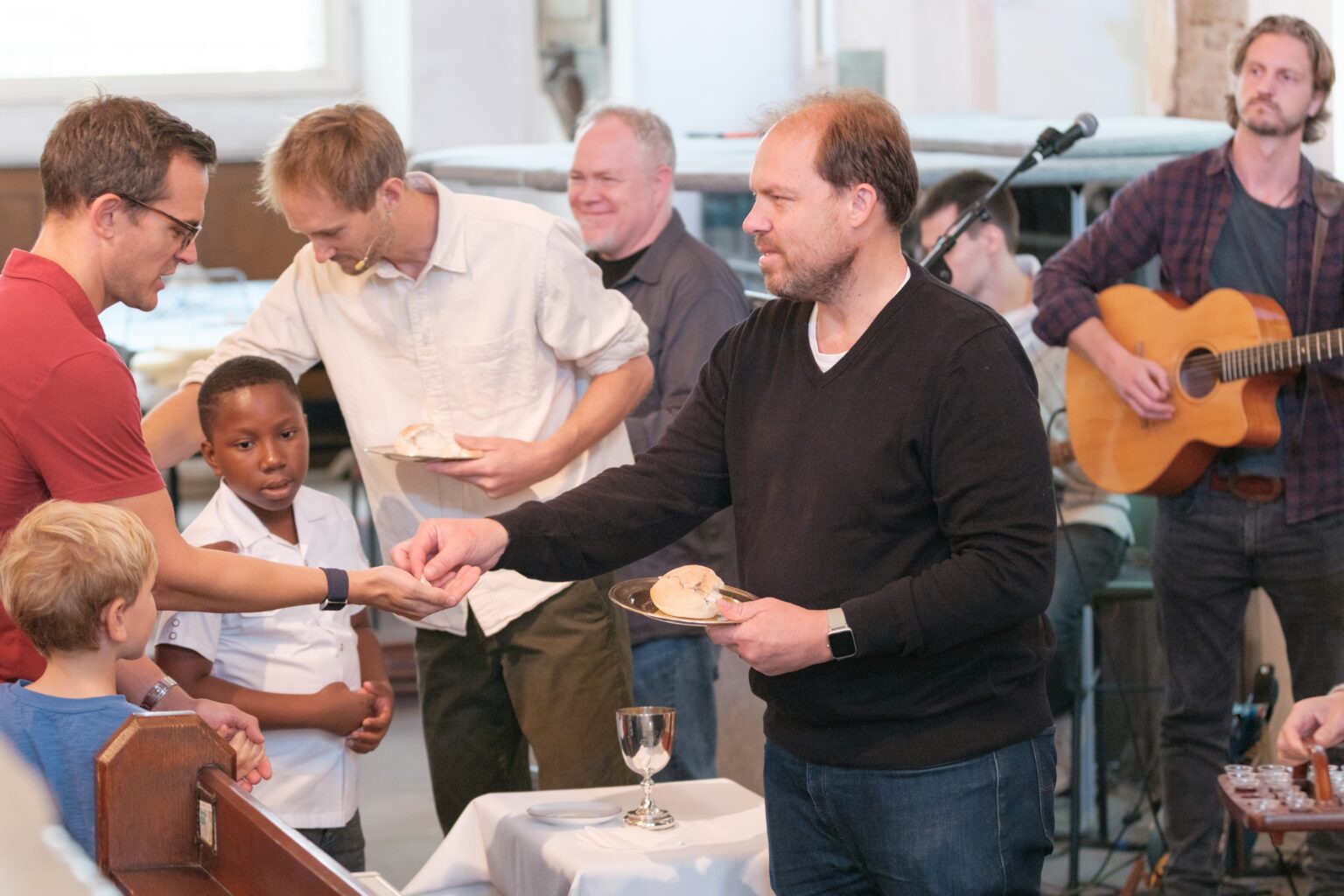
We generally celebrate the Lord’s Supper (sometimes called Communion) once a month. We invite all those who know and
love the Lord Jesus (and who are baptised) to receive bread and wine. Practically, we take a small piece of bread and an
individual cup of wine from those serving at the front of church, return to our seats, and then eat and drink together.
You are also welcome to come forward for a prayer if you wish.
We believe that the Lord’s Supper is a family meal for the people of God. It is modelled on the Last Supper Jesus shared
with his disciples (Luke 22; 1 Corinthians 11), which in turn was modelled upon upon the Passover meal shared by the Hebrews
on the night God rescued them from slavery in Egypt. On that occasion God expected the children to eat the food
(Exodus 12:4) and ask what the meal meant (Exodus 12:26).
We therefore invite the children of believing parents to share in the Lord’s Supper as well. Admitting children to the
Lord’s Supper is permitted by the Church of England provided they are ‘properly prepared’ and around 7-8 years old.
We believe this preparation best takes place at home with parents explaining what the meal means (see Exodus 12:27).
If you would like your children to receive the Lord’s Supper, please let our minister know so he can help you think about
how best to explain it to them. He would welcome an informal conversation with you and your children if that would be useful.
Each time we celebrate the Lord’s Supper, our minister invites parents to bring children forward either for a prayer or to
receive as appropriate.
We generally celebrate the Lord’s Supper (sometimes called Communion) once a month. We invite all those who know and love the Lord Jesus (and who are baptised) to receive bread and wine. Practically, we take a small piece of bread and an individual cup of wine from those serving at the front of church, return to our seats, and then eat and drink together. You are also welcome to come forward for a prayer if you wish.
We believe that the Lord’s Supper is a family meal for the people of God. It is modelled on the Last Supper Jesus shared with his disciples (Luke 22; 1 Corinthians 11), which in turn was modelled upon upon the Passover meal shared by the Hebrews on the night God rescued them from slavery in Egypt. On that occasion God expected the children to eat the food (Exodus 12:4) and ask what the meal meant (Exodus 12:26).
We therefore invite the children of believing parents to share in the Lord’s Supper as well. Admitting children to the Lord’s Supper is permitted by the Church of England provided they are ‘properly prepared’ and around 7-8 years old. We believe this preparation best takes place at home with parents explaining what the meal means (see Exodus 12:27).
If you would like your children to receive the Lord’s Supper, please let our minister know so he can help you think about how best to explain it to them. He would welcome an informal conversation with you and your children if that would be useful. Each time we celebrate the Lord’s Supper, our minister invites parents to bring children forward either for a prayer or to receive as appropriate.
Got questions?
We hope that the way we celebrate these two sacraments reminds us of God’s grace and strengthens our faith in Jesus.
We also hope you find our celebration of them enjoyable and helpful. But if you’ve got any questions, please just ask!
We hope that the way we celebrate these two sacraments reminds us of God’s grace and strengthens our faith in Jesus. We also hope you find our celebration of them enjoyable and helpful. But if you’ve got any questions, please just ask!
